
The Best Cabinets for Hawaii’s Climate: What You Need to Know
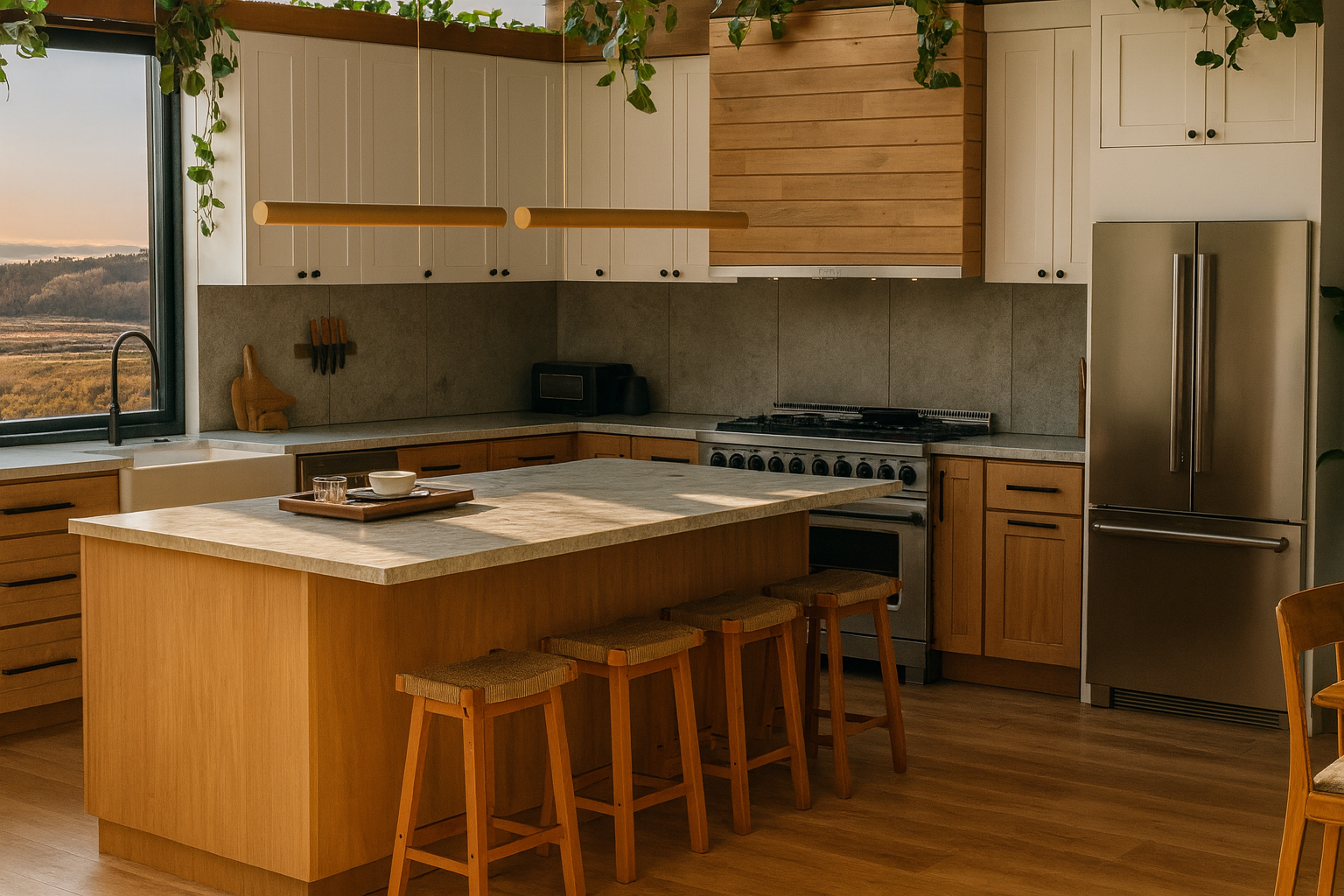
Renovating a kitchen or bathroom in Hawaii comes with challenges that homeowners on the mainland often do not have to think about. The islands offer an incredible lifestyle, but the environment is demanding on building materials. Constant humidity, salt air, strong UV exposure, and heavy termite activity can all shorten the lifespan of poorly made cabinets. A cabinet that looks great in a showroom can begin showing signs of wear surprisingly quickly in Hawaii if it is made with the wrong materials. Swelling doors, peeling finishes, soft cabinet boxes, rusting hardware, and warped panels are all common problems when cabinets are not built for island conditions. That is why material selection matters more here than in many other places.
This guide breaks down the most common cabinet materials, how they perform in Hawaii’s climate, and what homeowners should know before investing in a remodel.
Why Hawaii’s Climate Is Tough on Cabinets
Many cabinet manufacturers build products for mainland conditions, where humidity levels fluctuate seasonally and homes experience colder, drier weather during parts of the year. Hawaii is different. Moisture levels stay consistently high year-round, especially in kitchens and bathrooms where steam and humidity already build naturally. That constant exposure affects materials over time.
Humidity and Moisture
Moisture is one of the biggest reasons cabinets fail in Hawaii. Materials that absorb water easily can swell, soften, warp, or break down around edges and seams. Areas around sinks, dishwashers, refrigerators, and bathroom vanities are especially vulnerable. Once lower-quality materials absorb moisture, they rarely return to their original shape. Doors stop aligning properly, hinges loosen, and surfaces begin deteriorating.
Salt Air
Homes near the coast deal with another issue: salt air. Even if you are not directly on the beach, salt travels through the air and gradually corrodes hardware, hinges, screws, and finishes. This is why hardware quality matters. Cheap hinges and handles often begin rusting or deteriorating much faster in coastal areas.
Sun Exposure and Heat
Hawaii’s sunlight is intense. Large kitchen windows and open-concept homes are beautiful, but direct UV exposure can fade stains and paint over time. Darker finishes often show fading more noticeably, while lower-quality paints may discolor unevenly. Heat can also affect adhesives used in laminate and low-end cabinet construction.
Termites
Hawaii has one of the highest rates of termite activity in the United States. Certain wood species and untreated materials are more susceptible than others. This does not mean wood cabinets are a bad choice, but it does mean the construction quality and treatment process are extremely important.
Comparing Cabinet Materials
Not all cabinet materials perform the same in Hawaii’s environment. Some hold up exceptionally well, while others tend to deteriorate much faster under constant humidity and coastal exposure.
Particleboard
Particleboard is one of the most common materials found in lower-cost cabinets sold through big box retailers. It is made from compressed wood particles and adhesives. While affordable upfront, it is generally one of the weakest options for Hawaii homes. Particleboard absorbs moisture easily. Once water penetrates the surface, the material swells and softens, especially around sinks, dishwashers, or plumbing areas. Over time, screws loosen, hinges fail, and cabinet doors become misaligned. Even small amounts of moisture exposure can create permanent damage. In dry mainland climates, particleboard may last longer, but Hawaii’s constant humidity accelerates wear considerably. For kitchens and bathrooms, it is typically not a long-term solution.
MDF
MDF, or medium-density fiberboard, is denser and smoother than particleboard, which makes it popular for painted cabinet finishes. However, lower-quality MDF still struggles in high-moisture environments. Like particleboard, it can swell when exposed to water and humidity. Once edges begin expanding, the damage is difficult to reverse. Higher-quality moisture-resistant MDF exists and performs better than budget-grade versions, but in Hawaii, plywood construction is still generally considered the more reliable choice for cabinet boxes.
Solid Wood
Solid wood cabinets sometimes get mixed reviews in humid climates, but much of the concern is misunderstood. Wood naturally expands and contracts with moisture changes. However, Hawaii’s humidity tends to stay relatively stable throughout the year compared to mainland climates with dramatic seasonal swings. That stability can actually help solid wood perform more consistently. The key is proper finishing and sealing. Cabinet doors and drawer fronts that are sealed on all sides, not just the visible front surface, are far more resistant to moisture penetration. Hardwoods such as maple, cherry, oak, and alder typically perform better than softer woods. Solid wood also offers advantages that many homeowners appreciate:
Natural character and grain variation
Long lifespan
Ability to refinish over time
Timeless appearance
For cabinet doors and drawer fronts, solid wood remains one of the best-performing materials available when properly built and finished.
Plywood
Plywood is widely considered one of the best materials for cabinet boxes in Hawaii. Unlike particleboard, plywood is made from multiple layers of wood veneer bonded together in alternating directions. This cross-layered construction creates greater dimensional stability and resistance to moisture-related warping. Plywood also holds screws and hinges more securely, which is important for cabinets that see heavy daily use. However, not all plywood is the same. Lower-quality plywood can still delaminate or weaken over time if inferior adhesives or low-grade cores are used. Higher-grade plywood costs more initially but offers significantly better long-term performance in humid environments. For Hawaii kitchens and bathrooms, plywood cabinet boxes are often the standard homeowners should look for when prioritizing durability.
Bamboo
Bamboo has become increasingly popular in Hawaii, and for good reason. Technically, bamboo is a grass rather than a hardwood, but its structure makes it extremely durable and dimensionally stable. It tends to resist swelling and warping better than many traditional woods, which is especially valuable in humid climates. Bamboo is also harder than several common hardwood species, helping it resist dents and everyday wear. Beyond performance, bamboo appeals to homeowners looking for a more sustainable material. It grows rapidly compared to hardwood trees and regenerates quickly after harvesting. Modern flat-panel bamboo cabinetry has also become popular for contemporary and island-modern kitchen designs. The main downside is cost. High-quality bamboo cabinetry is generally positioned at the premium end of the market. However, many homeowners feel the durability and appearance justify the investment, especially in Hawaii’s climate.
Laminate
Laminate cabinets are often chosen for affordability and design flexibility. They are available in a wide range of colors, textures, and modern finishes. Performance, however, depends heavily on quality and installation. In Hawaii’s humidity, poorly made laminate cabinets can begin peeling or separating at the edges over time, especially near heat and moisture sources. Steam from cooking or poor bathroom ventilation can accelerate this issue. That said, high-pressure laminates with proper edge sealing can still perform reasonably well when installed correctly and maintained properly. Ventilation becomes especially important with laminate cabinetry. Homes with strong airflow and proper kitchen ventilation systems will generally see better long-term performance.
Hardware Matters More Than People Realize
Cabinet materials are only part of the equation. Hardware quality plays a major role in how cabinets hold up over time in Hawaii. Cheap hinges and drawer slides often corrode quickly near the coast. Soft-close hardware can fail prematurely if lower-grade metal components are used.
Homeowners should look for:
High-quality soft-close hinges
Durable drawer slide systems
Corrosion-resistant finishes
Stainless steel or premium coated hardware
Even excellent cabinet materials can feel low quality if the hardware begins failing after a few years.
Proper Sealing and Finishing Are Critical
One of the biggest differences between cabinets that last and cabinets that deteriorate quickly is finishing quality. Properly sealed cabinets help protect against moisture intrusion, especially around edges, corners, and seams where water exposure is common. Painted cabinets should have consistent coverage on all sides, including interiors and edges. Stained wood and bamboo cabinets should use durable protective topcoats designed to handle humidity and UV exposure. This is particularly important in kitchens with large windows or strong sunlight exposure.
What Works Best for Hawaii Homes?
For most homeowners, the ideal cabinet construction combines multiple materials rather than relying on one single material throughout.
The combination that consistently performs best in Hawaii is:
Plywood cabinet boxes
Solid wood or bamboo doors
Quality hardware
Proper finishing and sealing
This construction balances durability, moisture resistance, appearance, and long-term reliability.
Where Arcade Green Fits In
At Arcade Green, cabinet materials are selected specifically with Hawaii’s climate in mind. Cabinet boxes are built with plywood construction for improved durability and moisture resistance. Doors are available in solid wood and bamboo options designed to handle island conditions more effectively over time. The semi-custom cabinet line includes more than 120 sizes and configurations, helping homeowners create a more customized layout without the long wait times often associated with fully custom cabinetry. For homeowners looking for a more personalized aesthetic, the Custom Finish cabinet line offers bamboo flat-panel cabinetry that can be painted or stained in virtually any color. Because all inventory is stocked locally in Honolulu, in-stock orders can typically be ready within three business days on Oahu.
The Bottom Line
Choosing cabinets in Hawaii is not only about appearance. It is about selecting materials that can realistically withstand the environment long-term. The upfront cost difference between lower-quality cabinets and better-built cabinetry may seem significant at first, but repairs, replacements, and premature deterioration often make cheaper materials more expensive over time. Cabinets built with plywood boxes, solid wood or bamboo doors, quality hardware, and proper sealing consistently offer the best long-term performance in Hawaii’s climate. If you are planning a kitchen or bathroom remodel, understanding how materials behave in island conditions can help you make a decision that still looks and performs well years from now.