
Why your Kitchen Can Look Exactly Right and Still Feel Wrong
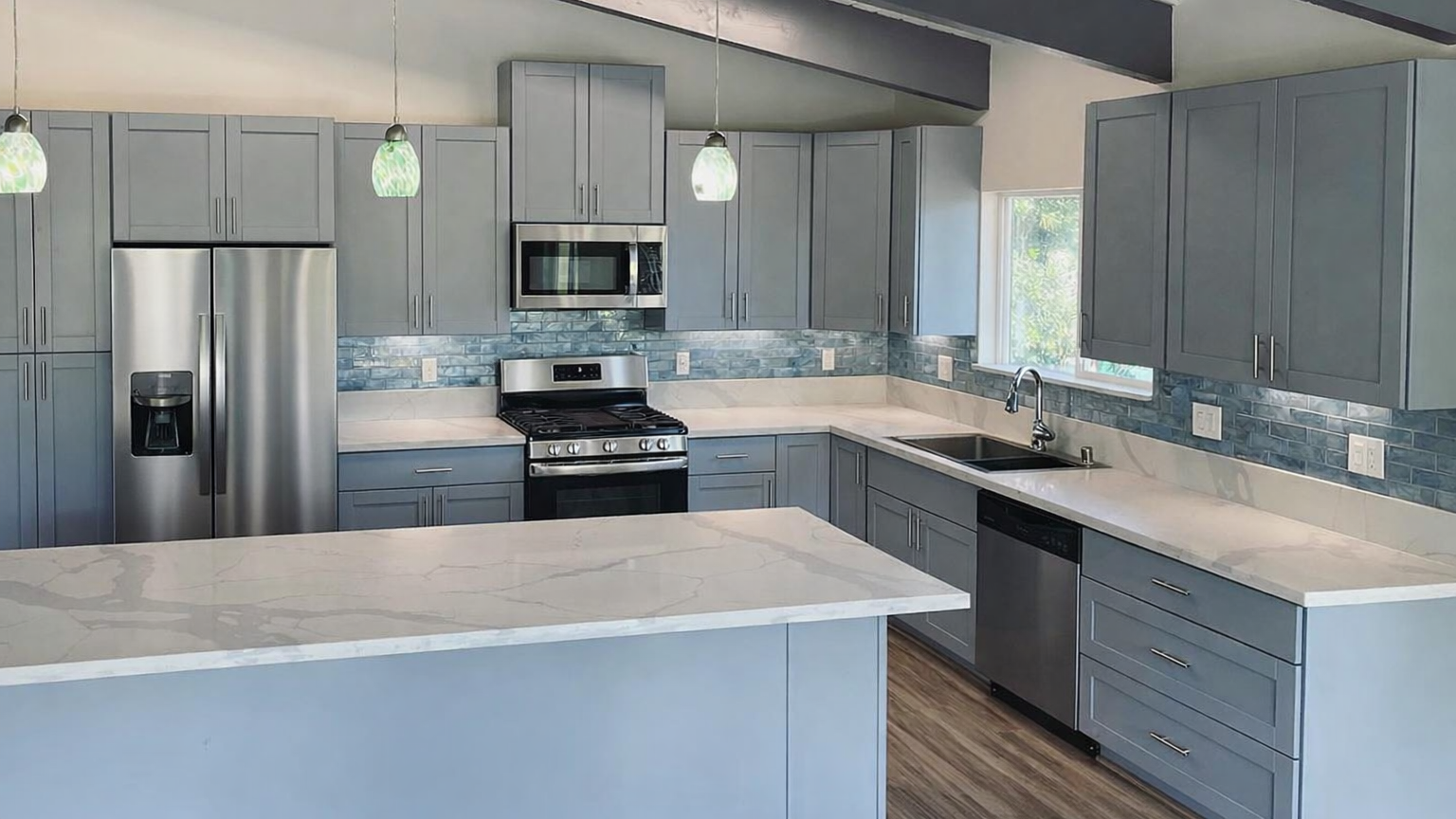
After working with hundreds of homeowners across Hawaii, we have noticed a pattern. People come in with a clear picture of what they want their kitchen to look like. Warm white shakers. Matte black hardware. Quartz countertops with a subtle vein. They have done the research. They know their aesthetic.
What they have not thought through yet is how they actually cook. How many people are in the kitchen at once. Whether they bake, or meal prep, or mostly just need it to function for a busy family that is always in a hurry. Whether the layout they have lived with for ten years is actually working, or just familiar.
That gap, between what a kitchen looks like and how it lives, is where most renovation regret comes from.
The Question We Always Ask
While helping our clients bring their dream kitchen layout to life, we focus on understanding more than just their style. Their routine tells us what cabinets are essential for their kitchen.
Do they cook every night or a few times a week? Do they bake? Do they entertain? Is there usually one person in the kitchen or two? Where do their kids do homework? Do they want the kitchen to feel open to the living room, or more contained?
These are not small talk. The answers shape everything: which cabinet configuration makes sense, where to add or reduce storage, whether a deep drawer bank serves you better than upper cabinets, whether an island is a genuine asset or something you will constantly navigate around.
Style comes into the conversation naturally. But it comes second.
The Part Most People Skip
Here is what happens when function gets skipped. The kitchen looks stunning on the day it is finished. The photos are great. Guests comment on it when they come over. And then six months in, you are stacking pots on top of each other again because the drawer configuration does not match how you actually cook. The corner cabinet has become a graveyard for things you never reach. The trash bin is sitting out in the open because there is simply no good place for it.
None of that shows up in a mood board. It shows up the third time you bang your knee on an open dishwasher door because it sits right in the path between the fridge and the stove. It shows up on Sunday afternoon when two people are trying to cook at the same time and the kitchen was only really designed for one.
The frustration is not about the cabinets being low quality. It is about the layout not matching the life that happens inside it.
A kitchen renovation is expensive and disruptive. Most people do it once, maybe twice. Getting the configuration right the first time is worth slowing down for.
Function Is Not the Opposite of Beautiful
There is a version of this conversation that sounds like a tradeoff, as if prioritizing function means settling for something clinical or plain. That is not what we are talking about.
A kitchen designed around how you actually live is more beautiful, not less. Because it feels right. The flow makes sense. There is counter space where you need it. The storage works without having to think about it. You are not constantly working around the room; you are moving through it.
That ease is something you feel every single day. A beautiful cabinet finish you will admire. A well-configured kitchen you will appreciate every time you cook.
The goal is not to choose one. It is to make sure neither one gets skipped.
What This Looks Like in Practice
A client comes to us wanting a clean, modern kitchen: white cabinets, minimal hardware, bright and open. Great. We love that direction.
But in conversation, we learn she cooks most nights, bakes on weekends, and her current kitchen has slowly become a game of Tetris. Pots and pans stacked on top of each other. Spices crammed into a corner cabinet she can never see the back of. A trash bin sitting out in the open because there is nowhere else to put it.
So we configure accordingly. Deep double-drawer bases for the cookware. A dedicated pull-out spice rack. A waste basket cabinet tucked cleanly under the counter. The aesthetic stays exactly where she wanted it. The kitchen finally works the way she needed it to.
That is the difference a conversation makes.
Another client comes in focused on entertaining. He hosts regularly and wants the kitchen to feel connected to the living area. Plenty of counter space, an island people can gather around, His everyday cooking is simple, but the kitchen carries social weight.
For him, the configuration leans toward an open layout, a large island with seating, and cabinet placement that keeps everyday clutter out of sight without requiring a full tidy before people arrive. The style he chose was bold. The function was designed for the way he actually uses the space.
Two kitchens, two completely different configurations, both exactly right for the people living in them. That only happens when you start with the right questions.
The Cabinet Decisions That Follow
Once we understand how someone cooks and lives, the cabinet decisions get much easier to make.
Deep drawer bases are often underused in kitchens. Most people default to doors with shelves because that is what they grew up with. But for pots, pans, mixing bowls, and anything heavy, drawers are faster to access and easier to keep organized. You can see everything at once without crouching down and digging to the back.
Corner cabinets are one of the most misunderstood spaces in a kitchen. They can either be dead storage you forget about or surprisingly functional, depending on how they are configured. Lazy Susans, pull-out drawers, and diagonal corner doors all handle that space differently. The right solution depends on what you are storing and how often you need it.
Island sizing is something people frequently misjudge. An island that looks proportional in a rendering can feel cramped in the actual space once you account for traffic flow on all sides. The standard recommendation is to leave enough room to open drawers or the dishwasher without blocking a path. That measurement is easy to overlook when you are focused on countertop material.
We Are Here to Ask the Right Questions
Arcade Green carries semi-custom cabinetry in over 120 sizes, and we keep everything warehoused locally in Honolulu so you are not waiting on mainland shipping timelines. Orders are ready within three business days. Anyone can sell you beautiful cabinets. We want to help you figure out the right ones.
Start with a complimentary design consultation and we'll help you figure out what actually works for your kitchen. Come visit us at the showroom or give us a call at 800-834-2959. You can also browse the full product line at arcadegreen.com.