
Kitchen Triangle vs. Kitchen Zoning: Which One Is Right for You?
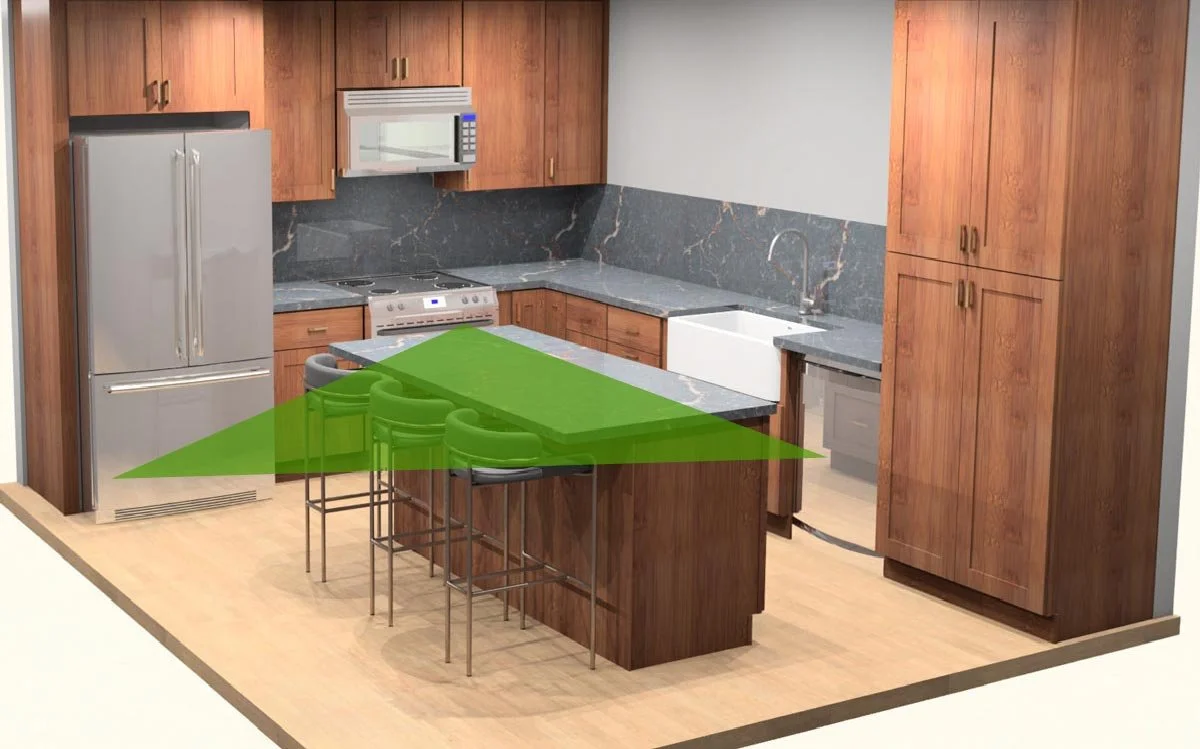
If you've ever researched kitchen layout, you've probably run into two schools of thought: the classic work triangle and the newer concept of kitchen zoning. Both approaches solve the same problem. They just solve it differently, and for different kinds of kitchens and lifestyles.
Here's an honest look at both.
The Work Triangle
The work triangle connects three points: the sink, the stove, and the refrigerator. The idea is to keep those three points close enough together that you're not walking laps while you cook, but far enough apart that you have room to work.
What it does well:
It's simple to understand and easy to apply during the planning phase
It works beautifully in smaller kitchens, galley layouts, and L-shaped spaces where you have one cook and three clear focal points
It minimizes unnecessary movement between the tasks you repeat most: getting ingredients, preparing food, and cooking it
Where it falls short:
It was designed for one cook. When two people are working at the same time, the triangle becomes a collision zone
Modern kitchens often have more than three focal points: a prep sink, a double oven, a built-in coffee station, a wine fridge. The triangle doesn't account for any of them
It focuses almost entirely on cooking efficiency and ignores how kitchens are used for gathering, entertaining, and everyday living
In larger, open-concept kitchens, a triangle can actually create wasted space by forcing three points into proximity when the room could support a more spread-out layout
Kitchen Zoning
Zoning organizes the kitchen into activity areas rather than connecting three appliances. Common zones include cooking, prep, cleaning, storage, serving, and sometimes a beverage or pantry zone. The goal is that everything you need for a given task lives within that task's zone.
What it does well:
It supports multiple people working at the same time without crossing paths
It reflects how we actually use kitchens today, not just for cooking but for homework, coffee, entertaining, and more
It scales well in larger or open-concept kitchens where a triangle would feel incomplete
It informs smarter cabinet placement, so storage is built around how you work, not just how the space looks
Where it falls short:
It requires more intentional planning upfront. You need to think through your habits, your household, and your daily routines before it can be applied well
In a small kitchen, full zoning can be overkill. You may not have the square footage to create distinct zones
Without good cabinetry to support each zone, the whole system starts to fall apart.
The Role of Cabinets in Kitchen Zoning
This is where most kitchen designs either work or fall apart. Zoning only works if your cabinetry supports it.
For example:
Deep drawers in the prep zone for utensils and cutting tools
Vertical storage near cooking for oils and spices
Dedicated pantry cabinets to reduce clutter
Smart corner solutions to maximize space in tighter layouts
Without the right cabinet configurations, zoning becomes just an idea instead of a functional system. If you’re exploring layouts, it helps to understand how different cabinet options support workflow.
So Which One Is Right for Your Kitchen?
Honestly, that depends on your space and how you use it.
If you have a smaller kitchen, a straightforward layout, and mostly one person cooking at a time, the triangle may be all you need. It's proven, practical, and still one of the cleaner ways to think about workflow in a compact space.
If you have a larger kitchen, cook with a partner or family, entertain often, or want your layout to reflect everything your kitchen does beyond just cooking, zoning gives you a more complete framework to work from.
The best kitchen isn’t just well designed, it’s designed around how you actually live. That’s why we offer a complimentary design service focused on understanding your day to day routine, how you cook, store, and move through your space. From there, we guide you toward the cabinet types and configurations that truly support your lifestyle, not just what looks good on paper.
Designing a Kitchen That Actually Works
A well-designed kitchen is not about following a rule. It’s about building around how you live.
That includes:
How often you cook
How many people use the space
What you store and where
How your kitchen connects to the rest of your home
That’s exactly how we approach kitchen design at Arcade Green. The best kitchen isn’t just well designed, it’s designed around how you actually live. That’s why we offer a complimentary design service focused on understanding your day to day routine, how you cook, store, and move through your space. From there, we guide you toward the cabinet types and configurations that truly support your lifestyle, not just what looks good on paper. If you’re planning a kitchen in Hawaii and want to get it right the first time, start with the layout. Everything else builds from there.